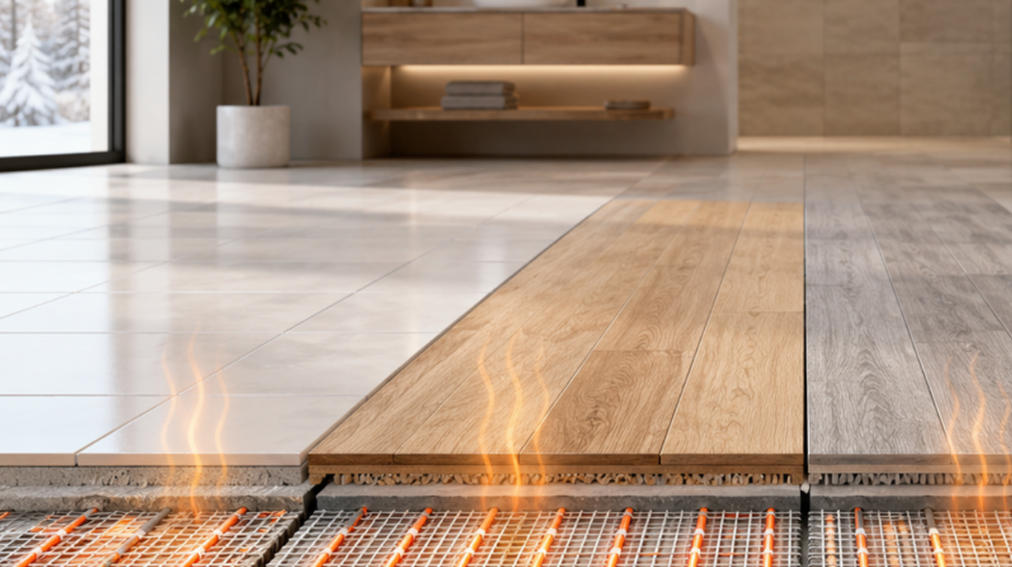
At ANLT, we believe the right electric floor heating mat should always be selected based on the flooring type first. Different floor coverings respond to heat in different ways, so the same heating structure is not suitable for every project. That is why we offer floor-specific electric underfloor heating solutions for tile, laminate, and vinyl/LVT applications, along with compatible underlayers and thermostat options. Our goal is to help customers choose a system that fits the floor construction, installation method, and comfort requirements of the space.
Why Flooring Type Matters
When selecting an electric floor heating mat, the floor covering affects heat transfer, installation approach, and temperature control. Tile floors typically allow direct and efficient heat transfer. Laminate floors often need a low-profile system that provides steady warmth without affecting the floor’s appearance or performance. Vinyl and LVT floors usually require more careful temperature control. Choosing the right system starts with understanding how the floor material will interact with heat.
Choosing Heating Mats for Tile Floors
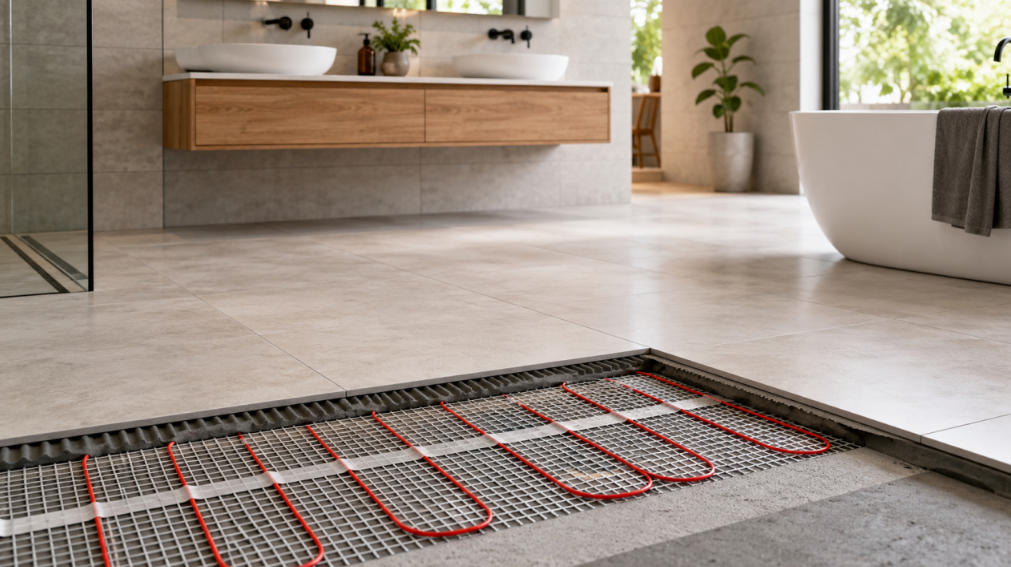
For tile applications, we usually recommend dedicated under-tile heating mats. Tile is one of the most practical flooring types for electric floor heating because it transfers heat efficiently and works well with thin heating systems. Our tile heating mats are designed to provide fast, even warmth and are suitable for spaces such as bathrooms, kitchens, and entryways. They are also designed for easy installation and compatibility with standard tile adhesives, making them a practical option for both renovation and new-build projects.
Choosing Heating Mats for Laminate Floors
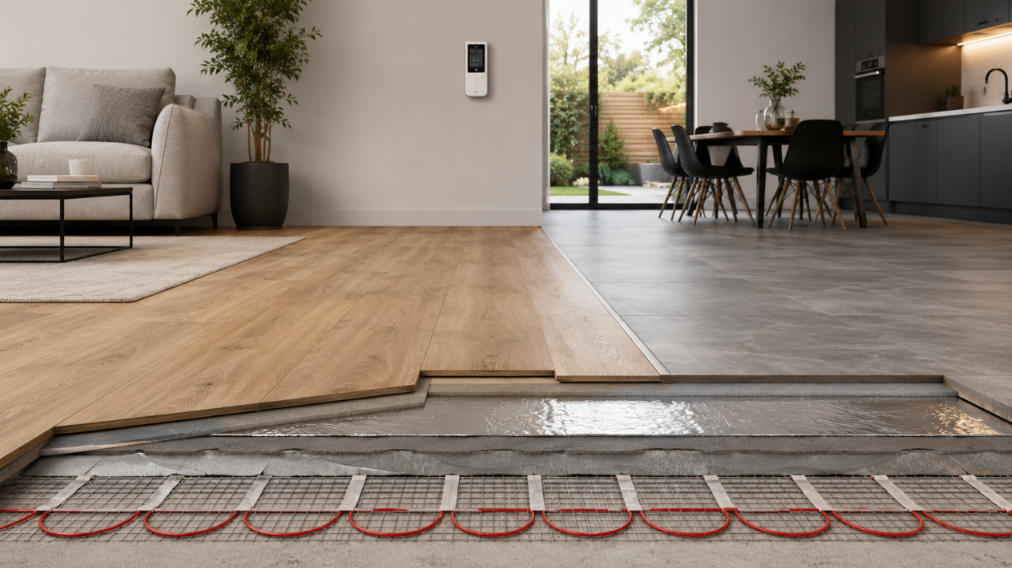
For laminate flooring, our recommendation is based on low-profile heating and controlled heat distribution. Laminate surfaces usually benefit from a system that delivers gentle, even warmth while helping maintain the floor’s appearance and stability. In these projects, we often recommend heating solutions that work well under floating floor structures. Our product range also includes aluminum foil mat systems designed for fast installation without wet work or adhesives, which can be especially useful where installation efficiency and dry construction are priorities.
Choosing Heating Mats for Vinyl/LVT Floors
Vinyl and LVT flooring require more careful temperature management than many other floor finishes. For these applications, we recommend low-profile heating mats designed to provide even warmth while helping protect the floor surface. We also emphasize thermostat compatibility so the system can maintain controlled floor temperatures. In many vinyl/LVT projects, a suitable underlayment is just as important as the heating mat itself, because it can support more even heat distribution and improve overall system performance.
Other Factors to Consider Before Ordering
Flooring type is the starting point, but it should not be the only factor in the selection process. We also recommend checking the effective heated area, installation method, wattage level, and thermostat strategy before choosing a system. Lower-wattage solutions can be suitable where gentle, controlled heating is preferred, while higher-power options may be better for larger spaces or areas with higher heat loss. Matching these details correctly helps create a heating solution that performs more reliably in real applications.
Why Work With ANLT
At ANLT, we do not treat floor heating as a one-size-fits-all product. We focus on electric underfloor heating systems and provide a product structure that covers heating mats, aluminum foil mats, heating films, heating cables, and thermostats. We also offer floor-specific supporting products for wood and vinyl applications, which helps our customers source more complete solutions from one supplier. For distributors, contractors, and project buyers, this makes product matching and project planning more efficient.
Conclusion
The best electric floor heating mat depends on the flooring type, installation method, and temperature-control requirements of the project. Tile floors usually work well with dedicated under-tile heating mats. Laminate floors often benefit from low-profile systems and foil-based solutions. Vinyl/LVT projects typically need more precise temperature management and suitable underlayers. At ANLT, we help customers choose the right system based on real flooring conditions, so the final solution is more practical, more reliable, and better suited to the application.