TL;DR
Electric floor heating mats are pre-spaced and faster to install — ideal for standard-shaped rooms like bathrooms and kitchens. Underfloor heating cables offer complete layout flexibility for irregular or large spaces. Both deliver the same radiant warmth, but your room shape, flooring type, and budget determine the better choice. ANLTH manufactures both systems with 25+ year lifespans and full CE/ETL certification.
When planning an Electric Floor Heating system, one of the most common questions homeowners, contractors, and distributors ask is: Should I choose floor heating cable or heating mat? Both systems provide efficient radiant warmth, improve indoor comfort, and help eliminate cold spots. However, they differ significantly in installation method, flexibility, cost, room suitability, and energy efficiency optimization.
In this guide, ANLT Heating — a professional ANLT Heating — will compare floor heating cable vs mat in detail, helping you select the best solution for residential, commercial, or renovation projects.
How Do Floor Heating Mats and Heating Cables Work?
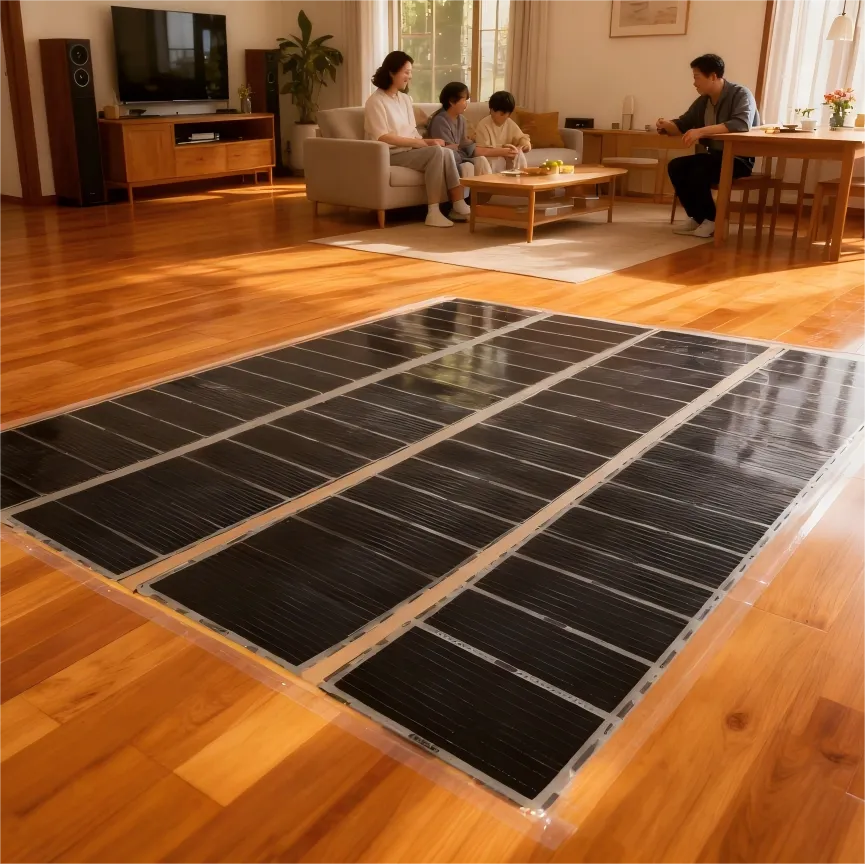
Floor heating mats consist of a heating cable pre-attached to a fiberglass mesh at a fixed spacing — typically 3 inches (7.6 cm) apart. You simply roll out the mat, cut and turn the mesh (never the cable), and embed it in thinset mortar before laying tile or stone. This pre-spaced design eliminates guesswork and can reduce installation time by approximately 30–50% compared to laying loose cable in regular-shaped rooms.
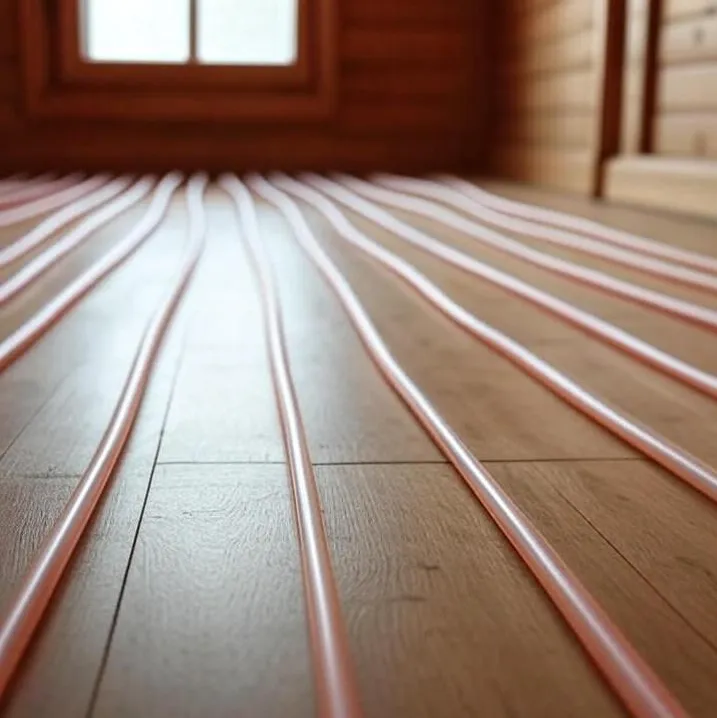
The underfloor heating cable (also called loose wire or heating cable) is supplied on spools. The installer manually lays the cable in a serpentine pattern with customizable spacing, typically between 2–4 inches. This flexibility allows precise control over heat output per square foot, making it particularly suitable for irregularly shaped rooms, rooms with obstacles, or large custom layouts.
Many professional contractors prefer loose cable systems for larger or complex projects (often over 200 sq. ft.) where the ability to adjust spacing and routing provides greater design freedom, even though it requires more installation time.
Both systems operate at either 120V or 240V, are available in single-conductor or dual-conductor designs, and work best when paired with a programmable thermostat for efficient, on-demand or scheduled heating.
Floor Heating Mat vs Cable: Quick Comparison Table
Feature | Electric Floor Heating Mat | Underfloor Heating Cable |
Installation Flexibility | Moderate | Excellent |
Installation Speed | Faster | Slower |
Best for Room Shapes | Standard rectangular rooms | Irregular rooms |
DIY Friendliness | High | Medium |
Labor Cost | Lower | Higher |
Custom Spacing | Limited | Yes |
Heating Uniformity | Very consistent | Excellent when designed correctly |
Renovation Projects | Suitable | Very suitable |
Large Open Areas | Excellent | Good |
Initial Material Cost | Slightly higher | Lower |
Common Flooring | Tile, laminate, stone | Tile, stone, vinyl |
Installation Complexity | Lower | Higher |
Data insights: Mats can reduce labor time significantly in straightforward projects, potentially saving hours on a 200 sq ft install. Cables offer better value for areas over 200 sq ft where material savings add up. Both systems pair well with programmable thermostats to cut energy use by optimizing runtime.
Which System Fits Your Room Shape?
Room geometry is one of the most important factors when choosing between floor heating mats and heating cables.
Heating mats are engineered for rectangular or square rooms where you can unroll the mesh in straight lines with minimal cutting. Bathrooms, entryways, laundry rooms, and standard kitchen areas are ideal candidates. A typical 40 sq. ft. bathroom mat can often be installed in under 2–3 hours with basic tools and proper preparation.
Loose underfloor heating cable becomes the preferred choice as soon as a room features an L-shaped layout, alcoves, built-in features, or requires coverage around obstacles such as islands, toilets, or cabinets. Cable spacing can be tightened in high-use zones (e.g., near sinks or in front of vanities) and widened in low-traffic areas — offering a level of customization that no pre-spaced mat can match.
Recommended System by Room Type
Bathroom (under 80 sq. ft.): Heating mat — fast install, consistent wattage, no cutting risk
Kitchen (regular shape): Heating mat — easy to layout around cabinet footprint
L-shaped room or open plan: Loose cable — full routing control
Basement slab or new construction: Loose cable — embedded in concrete pour for maximum efficiency
Retrofit under LVT or laminate: Ultra-thin mat — minimal floor height impact
Installation Difficulty: Which System Is Easier to Install?
Both electric floor heating mats and underfloor heating cables must comply with the National Electrical Code (NEC Article 424), which requires Ground-Fault Circuit-Interrupter (GFCI) protection for personnel on all floor heating systems. Final electrical connections to the thermostat and power supply should always be performed by a licensed electrician in most U.S. jurisdictions and EU countries.
However, the physical installation of the heating element itself can vary significantly in difficulty:
Electric floor heating mats are generally the easier and more DIY-friendly option. The heating cable is pre-attached to a fiberglass mesh at fixed spacing (typically 3 inches / 7.6 cm), allowing you to simply roll it out, cut the mesh (never the cable) to change direction, and secure it to the subfloor. This design greatly reduces common installation errors and can make the process significantly faster for standard rooms.
Loose underfloor heating cables require more skill and time. Installers must manually calculate spacing, lay the cable in a serpentine pattern, and secure it at consistent intervals using staples or fixing membranes. This added flexibility comes with extra planning and labor — first-time installers often spend 1–2 additional hours on a 100 sq. ft. project.
At ANLT Heating, our electric floor heating mats come with color-coded cold leads, clear installation diagrams, and detailed guides to simplify the process. Our underfloor heating cables include layout planning tools and dedicated technical support to help ensure a successful installation.
Cost Comparison: Upfront vs. Operating Costs
When comparing electric floor heating mats and underfloor heating cables, it's important to look at both upfront costs (materials + installation) and long-term operating expenses.
Upfront Costs (Materials + Installation)
Electric Floor Heating Mats: Typically range from $6–$12 per sq ft installed. The pre-assembled design makes them more expensive in materials but faster to install, which helps reduce labor costs. They are often the most cost-effective choice for small to medium rooms (under 200 sq ft).
Underfloor Heating Cables (Loose Wire): Generally 20–30% lower in material cost than mats — often $5–$10 per sq ft installed. While materials are cheaper, they require more labor time for manual layout, which can increase total installation cost on smaller projects.
Industry Insight: For areas larger than 100–200 sq ft, loose cable systems frequently deliver better overall upfront value due to lower material pricing, especially in complex layouts.
Operating Costs
Both systems are nearly 100% energy efficient at the point of use (all electricity is converted to heat). Operating costs are therefore very similar when the same wattage density (typically 12–15 watts per sq ft) and thermostat settings are used.
Average monthly operating cost for a 50 sq ft bathroom (used 4–8 hours/day) typically ranges from $15–$45, depending on local electricity rates ($0.12–$0.30 per kWh) and insulation quality.
With a programmable thermostat, many homeowners report 20–40% lower overall heating bills compared to forced-air systems, thanks to zonal control and the absence of duct losses.
Why Choose ANLT Heating?
As an experienced ANLT Heating, ANLT Heating provides reliable and energy-efficient radiant heating solutions for global distributors, contractors, and OEM partners.
ANLT Heating Advantages:
Professional underfloor heating manufacturer
OEM & ODM support
International certifications
Stable production capacity
Strict quality control
Customized heating solutions
Global export experience
.
FAQ: Floor Heating Cable vs Mat
1. Which is better: floor heating cable or mat?
Neither is universally better. Heating mats are easier and faster to install, while heating cables provide greater flexibility for irregular spaces.
2. Are electric floor heating systems expensive to run?
Modern systems are highly energy efficient. Actual operating cost depends on insulation, room size, thermostat settings, and local electricity prices.
3. Can electric floor heating be installed under tile?
Yes. Tile and stone are among the best flooring materials for radiant floor heating because they transfer heat efficiently.
4. How long do floor heating systems last?
High-quality electric floor heating systems can last 20–30 years or more when properly installed.
5. Which system heats faster?
Heating mats often provide slightly more consistent warm-up performance because of uniform cable spacing, although both systems can achieve similar comfort levels.
Conclusion
When comparing floor heating cable vs mat, the right choice depends on your project layout, installation requirements, budget, and heating goals.
Both systems deliver efficient, comfortable, and modern radiant heating performance when properly designed and installed.
As a trusted ANLT Heating, ANLT Heating offers professional solutions for residential and commercial electric floor heating projects worldwide. Whether you need customized underfloor heating cable systems or ready-to-install electric floor heating mats, ANLT can help you build safer, smarter, and more energy-efficient heating solutions.